
Questions About Science: Is Science rational?
The Taboo of Subjectivity

Abstract Can science remain rational if scientists are not? This post examines the overlap between science and religion, the taboo of subjectivity, and the myth of pure objectivity in modern scientific thought.
Science is supposed to be rational. But how can science be rational if it is done by scientists who often behave in an irrational way?
To start with let us touch here, briefly, the problem of Science vs. religion – we will discuss it in detail later on. The difference between these two domains is examined by Bertrand Russell in his “Religion and Science”.

The book, "Understanding Science and Religion" would be of a similar size.
Science is Bottom Up
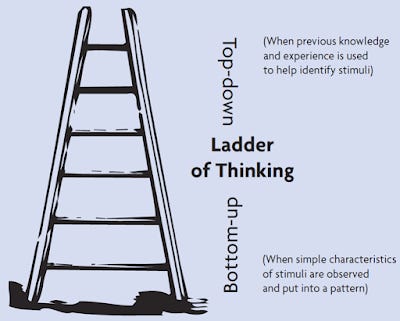
In Science we start from observations, from data, and then we build general rules, or principles that are supposed to explain these data and predict new data. Once in a while, when new data are acquired, or when a new insight into their interpretation appears, our old explanations do not suffice, and a revision of general principles is needed. That is, in short, how Science is done, or how it is supposed to work. One can say that Science is built bottom-up, from a large number of observations to a unified theory.
Religion is Top Down
Religion, on the other hand, is constructed top-down, from general principles, by deduction, reasoning and interpretation, to simple rules that are to be applied in everyday lives. Once in a while the reasoning is revised and religious practices change, but the starting principles remain essentially unchanged. As Russell sums it up:
A religious creed differs from a scientific theory in claiming to embody eternal and absolutely certain truth, whereas science is always tentative, expecting that modifications in its present theories will sooner or later be found necessary, and aware that its method is one being logically incapable at a complete and final demonstration.
He notices also another important difference between religion and Science:
The conflict between theology and science was quite as much a conflict between authority and observation. The men of science did not ask that propositions should be believed because some important authority had said they were true; on the contrary, they appealed to the evidence of the senses, and maintained only such doctrines as they believed to be based upon facts which were patent to all who chose to make necessary observations.
Religion and Science in Society
Religion and Science also had different functions in society. One of the functions of religion was clearly pointed out in an old treatise “History of the Conflict between Religion and Science” by John William Draper, professor at the University of New York and the author of “A Treatise on Human Physiology”. He wrote in 1875:
A few years ago, it was the politic and therefore the proper course to abstain from all allusion to this controversy, and to keep it as far as possible in the background. The tranquility of society depends so much on the stability of its religious convictions, that no one can be justified in wantonly disturbing them.
How is the situation different today? Religion is still a convenient tool for maintaining the tranquility of society, but, in the meantime, Science, industry and technology have provided other efficient means. Nowadays we have drugs and other chemicals, globally controlled media, Artificial Intelligence, and psychological techniques – they are all at the disposal of those whose aim is to tranquilize society. Thus, religion is no longer needed by science and perhaps this is one of the reasons for the increasing conflict?
Are All Scientists Rational?
After this digression let us come back to the question of whether or not scientists can be rational? After all, just acquiring the status of being a scientist does not mean that a person is no longer subject to all the foibles of being human.
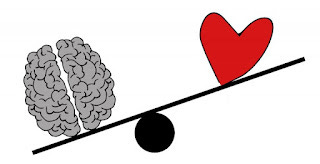
Rationality requires abandoning the blind attachment to any authorities. Religion, on the other hand, rests on authorities. Can these two different modes of thinking be separated in an individual?

The Taboo of Subjectivity
Alan Wallace, physicist, philosopher of science, who also has a PhD in religious studies from Stanford, addresses this very question in his book “The Taboo of Subjectivity: Towards a New Science of Consciousness”.

B. Alan Wallace
After elucidating the differences in goals and in the methods of religion and Science, he asks whether it is possible to separate these two domains within an individual?
According to some thinkers, a more feasible way of demarcating science and religion is to grant science authority in terms of knowledge of the natural world and to appoint it the task of providing humanity with the technological means of mastering the forces of nature to ensure our physical survival and well-being. The proper arena of religion, they say, is the sacred world, with all the ideals and moral directives for human behavior that issue forth from that domain.
But such a separation, he notices, is not possible.
This model is feasible if we believe the sacred world exists independently of, and has no influence in, the world of nature and human life. But the great majority of religious believers today believe that the object, or objects, of their religious devotion is very much present and active in nature and in the lives of human beings. Thus, according to those believers, the absolute demarcation between the sacred and the profane is untenable.
The two realities, the sacred and the natural, overlap and it is not possible to separate them sharply. Then he addresses the issue of different methodologies.
Another approach to this problem is to distinguish science from religion in terms not of their domains of authority but their methodologies. Following this line of thought, science may be identified by its methodology of depersonalizing phenomena. That is, science attempts to account for a given phenomenon independently of the particular subject who observes it. Religion, on the contrary, some argue, is based on experiences taken in their subjective and individual elements.
The attempts to separate these two different modes of looking at the world, both the inner one and the external one, lead to schizophrenia-type disturbances:
But our intellect and feelings do not function autonomously; our thoughts are frequently charged with emotion, and our feelings arise in response to what we think to be true. To reify and alienate these facets of our inner life is to fragment each of us from within. We are persons whose bodies can be objectively studied according to the impersonal laws of physics but whose minds are subjectively experienced in ways science has not yet been able to fathom. In short, by radically separating science from religion, we are not merely segregating two human institutions; we are fragmenting ourselves as individuals and as a society in ways that lead to deep, unresolved conflicts in terms of our view of the world, our values, and our way of life. (Italics, mine.)
In "The Intersubjective Worlds of Science and Religion" Wallace states it succinctly:
"The very distinction between the terms “subjective” and “objective” is itself embedded in a conceptual framework, and there is no way to justify the assertion that any truth-claim is purely objective or purely subjective."
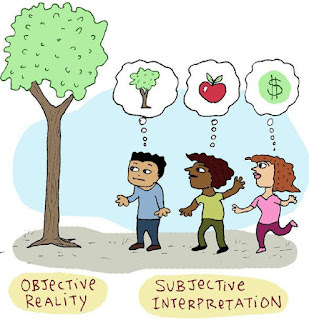
While science should by all means to aim at being objective, scientists should not be afraid of being subjective in determining the goals, the methods and the means of their scientific pursuits.
The Nature of Reality: A Dialogue Between a Buddhist Scholar and a Theoretical Physicist
Do Atheists Make Better Scientists?
Is atheism a better solution for those who would like to rely on undisturbed rational thinking? I do not think so, because atheists tend to believe in their own creed which they consider to be the absolute answer! Richard Dawkins and his blind attachment to his narrow “blind watchmaker” view of the role of evolution is one example.

Later on I will show examples of how irrational scientists can be, and how Science suffers from their irrationalities.
This Quorum
https://www.baskalarinahizmet.com/sorguluyoruz/kasyopya-celseleri-dion-analizi-ve-incelemesi
This Quorum
https://www.baskalarinahizmet.com/sorguluyoruz/kasyopya-celseleri-dion-analizi-ve-incelemesi